Welcome to the last blog of the first quarter. Once again I'd like to say how much I appreciate the effort you all put into the comments each week. It means a lot to me, as a teacher, to see you taking things so seriously. It does not go unnoticed.
We could spend the entire semester on the settling of the thirteen colonies, but we don't have that much time. Each region, Southern, Middle and New England, was very distinct for political, religious and cultural reasons. One of the most unique events in the colonial era occurred in the New England colony of Massachusetts.
Massachusetts Bay Colony (aka Massachusetts) was settled beginning in the 1630s by a religious group from Europe known as the Puritans. These were men and women who were so dissatisfied by the state of religious affairs in England they thought it better to separate (which is why they were called Separatists) and start their own colony in America. One of their earliest leaders, John Winthrop, wanted Massachusetts to be a "city upon a hill" for all the world to admire and imitate.
During the 1630s, over 20,000 people left England to join the Puritans in Massachusetts. The colony continued to grow and thrive in the New World.
Puritans have acquired a bad reputation because of their strict adherence to the Bible. The general stereotype of a Puritan is someone who never smiles or has any fun, always wears black, avoids all worldly pleasures, works all the time and when they are not working, they are reading the Bible or praying. Basically, a real downer.
Part of this stereotype, like most stereotypes, comes from accurate aspects of the Puritan life that are merely exaggerated. Visit this website for a description of Puritan beliefs.
Perhaps the biggest blunder in Puritan history is what has garnered much of the negative attention. In the 1690s three women were suspected of "signing the Devil's compact", aka being witches. Soon the accusations spread throughout the small town of Salem, Massachusetts until a court had to be established to determine who was and was not a witch. If you denied being a witch but accused someone else of being a witch, it usually backfired because "it takes one to know one". Eventually the wife of the Governor of Massachusetts was accused of witchcraft and the Governor put a stop to the proceedings. Must be nice to have power, huh?
When it was all said and done, about 20 people were hung for being witches. Two dogs were condemned as well. Watch this video and read this primary source to get a better understand of the events surrounding the Salem Witch Trials. Use the comments section as a sounding board for your thoughts on this historical event. What is the problem when everyone jumps on board with an idea, even if the idea is ridiculous?
*Remember, your comments are due by Friday this week because it is the last day of the quarter. Also, since this blog counts as 100 points, your comments must be a minimum of 200 words this week.
Monday, October 1, 2012

Monday, September 17, 2012
Jamestown: Eternal Love or Eternal Struggle?
Roanoke may be famous for failing and being a mystery, but Jamestown is famous for surviving. In 1606, the Virginia Jointstock Company asked for permission to try colonizing America again. A jointstock company is a group of people, in this case all men, who gather their money and resources together to send an expedition in order to colonize. If the group is successful, the jointstock company makes a profit. If it fails, they have lost their investment. Anyway, the Virginia Company sent a group to colonize and in 1607 Jamestown was settled on the coast of Virginia on the James River. (By the way, are you seeing a pattern here of how things were named?) The group's main focus was gold, which meant planting stable crops for sustenance was not a priority. As a result, LOTS of men died due to starvation (hence "Starving Time"). Read this little ditty about how desperate they were for food. (I apologize for the one curse word in the opening paragraph. I did not realize that was in there until after the post went live. Just ignore it please.)
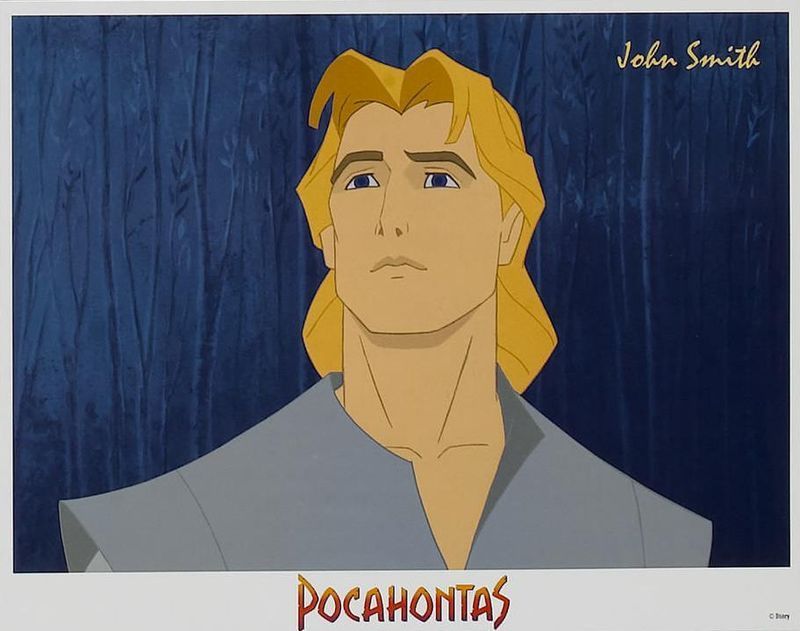
Another legacy of Jamestown is the relationship between John Smith (the man who got the colony on track) and Pocahontas. We will be discussing this topic all week so I'm not going to get into it here. What I want you to do is examine the four photos below and read this story. Why do you think, out of all the important aspects of Jamestown and the beginnings of America, does this relationship capture out attention. Especially when most people think it was romantic, thanks to Disney, when it really was not. Do you have a problem with the Disney characters looking NOTHING LIKE the actual people from the 17th Century?


Another legacy of Jamestown is the relationship between John Smith (the man who got the colony on track) and Pocahontas. We will be discussing this topic all week so I'm not going to get into it here. What I want you to do is examine the four photos below and read this story. Why do you think, out of all the important aspects of Jamestown and the beginnings of America, does this relationship capture out attention. Especially when most people think it was romantic, thanks to Disney, when it really was not. Do you have a problem with the Disney characters looking NOTHING LIKE the actual people from the 17th Century?


Monday, September 10, 2012
Roanoke: The Lost Colony
All of this exploration and European rivalry eventually trickled its way into the English bloodstream. After England defeated the Spanish Armada (most powerful navy in the world at that time) in 1588, they felt secure enough to travel across the Atlantic and try their hand at colonization.
One of the first major attempts was a colony off the coast of North Carolina on Roanoke Island. Set up by Sir Walter Raleigh, a group traveled to North America, survived for few years and then disappeared. To this day no one knows what happened to this English colony.
Read this story about the possible theories explaining their disappearance. In the comments section, choose the theory that makes the most sense to you and explain why. Also, discuss what would have been some of the difficulties of living in a brand new land 3,000 miles away from home.
One of the first major attempts was a colony off the coast of North Carolina on Roanoke Island. Set up by Sir Walter Raleigh, a group traveled to North America, survived for few years and then disappeared. To this day no one knows what happened to this English colony.
Read this story about the possible theories explaining their disappearance. In the comments section, choose the theory that makes the most sense to you and explain why. Also, discuss what would have been some of the difficulties of living in a brand new land 3,000 miles away from home.
Tuesday, September 4, 2012
The Columbian Exchange: When The World Began To Come Together
Let's have a more pleasant topic this week shall we?
One of the effects of Columbus' voyages is the globalization of world resources. This phrase indicates the goods, diseases, animals and other products from Europe, Africa and the Americas were now being carried back and forth due to the Age of Exploration.
Study the graphic below. In the comments section, describe what you think are the most important items (whether positive or negative) that were being transmitted globally for the first time.

One of the effects of Columbus' voyages is the globalization of world resources. This phrase indicates the goods, diseases, animals and other products from Europe, Africa and the Americas were now being carried back and forth due to the Age of Exploration.
Study the graphic below. In the comments section, describe what you think are the most important items (whether positive or negative) that were being transmitted globally for the first time.

Monday, August 27, 2012
Christopher Columbus: The Hitler of the 15th Century?
So...ole CC wasn't the guy you thought he was eh? Well, that's called education my friends. As it turns out, most people don't know, or don't like to think about, the realities of the Europeans "finding the Americas". Chapter One in our text clearly showed both North and South America was filled with millions of indigenous peoples from at least 2,000 separate tribes. So obviously Columbus did not "discover" anything.
The real trouble with Columbus is the struggle to appropriately memorialize him. It is undeniable that his "glorious fail" in 1492 led to the founding of America. It is also undeniable that he had no idea what he had done and his treatment of the natives was simply atrocious.
For this week's blog, please watch this video and this video. What versions of Columbus' life in the Americas are these videos telling. Which one do you think is the most appropriate? Is either one out of line either by being too harsh or too childish?
The real trouble with Columbus is the struggle to appropriately memorialize him. It is undeniable that his "glorious fail" in 1492 led to the founding of America. It is also undeniable that he had no idea what he had done and his treatment of the natives was simply atrocious.
For this week's blog, please watch this video and this video. What versions of Columbus' life in the Americas are these videos telling. Which one do you think is the most appropriate? Is either one out of line either by being too harsh or too childish?
Tuesday, August 21, 2012
Columbus: The Most Glorious Fail
Christopher Columbus had no intention of finding a New World. He was sailing westward across the Atlantic in hopes of finding a faster water route to Asia. He wanted to bring wealth and prestige to the Spanish government, and to himself. Instead, using maps that were incorrect (although he did not know they were incorrect) he ran into an island in the Caribbean and thought he was near India. This is why, of course, he called the locals Indians!
The legacy of Columbus is one of bravery and accidental genius. There is a dark side to the man, however. We will get to that on our next blog. For now, read this story and discuss in the comments section your initial thoughts on Columbus.
The legacy of Columbus is one of bravery and accidental genius. There is a dark side to the man, however. We will get to that on our next blog. For now, read this story and discuss in the comments section your initial thoughts on Columbus.
Monday, August 13, 2012
Pre-Columbian Americas: More Civilized Than You May Think
A common misconception about life in the Americas before the Europeans showed up is that early societies were backwards and uncivilized compared to the great European explorers of that era. While life may have been more primitive for some native groups, many societies were very complex with intricate religious and social systems. One excellent example was the Aztecs.
The Aztecs settled in the Lake Texcoco region of Mexico and built their capital city, Tenochtitlan, in the middle of this lake. When Hernan Cortes and his men came upon the city they were astonished to see something so magnificent in the "New World". Watch this video for further explanation on the construction of this city.
In the comments section below, write about the most interesting thing from the video. Also, address what it must have been like for Europeans to assume the people they would encounter would be less civilized than them only to discover a major city like Tenochtitlan? Would they be impressed? Nervous? Jealous? Excited? Do not forget to conclude your comments with the number of words in parentheses.
The Aztecs settled in the Lake Texcoco region of Mexico and built their capital city, Tenochtitlan, in the middle of this lake. When Hernan Cortes and his men came upon the city they were astonished to see something so magnificent in the "New World". Watch this video for further explanation on the construction of this city.
In the comments section below, write about the most interesting thing from the video. Also, address what it must have been like for Europeans to assume the people they would encounter would be less civilized than them only to discover a major city like Tenochtitlan? Would they be impressed? Nervous? Jealous? Excited? Do not forget to conclude your comments with the number of words in parentheses.
Subscribe to:
Posts (Atom)